
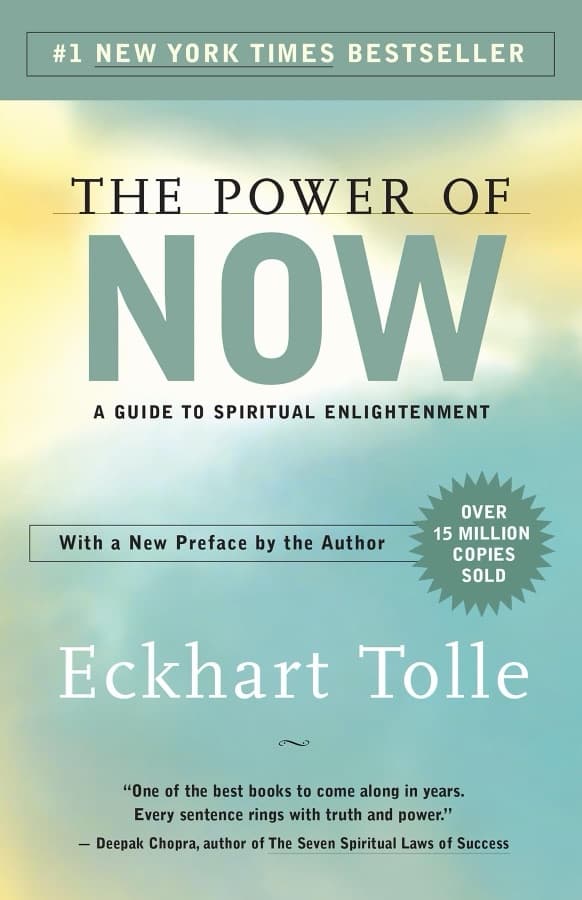
The Power of Now: A Guide to Spiritual Enlightenment
A gentle guide to quieting your busy mind and finding peace right now
Best for
- Overthinkers and worriers
- People starting a meditation practice
- Anyone going through a spiritual awakening
- Readers who want peace more than productivity
The Power of Now teaches that most of our stress comes from our thinking mind, which lives in the past and the future. Eckhart Tolle shows how to come back to the present moment, where peace is always waiting. It is one of the most loved books on presence and spiritual awakening.
Realize deeply that the present moment is all you have.
Key lessons
- 1
You are not your thoughts
You can watch your thoughts come and go, like clouds in the sky. You are the one who notices them.
- 2
Now is all there is
The past is a memory and the future is an idea. Life only ever happens in the present moment.
- 3
Most pain is made by the mind
Worry, regret and fear mostly come from thinking about times that are not here.
- 4
The pain-body
Old hurt can live inside you and flare up. Seeing it with calm awareness helps it lose its power.
- 5
Accept this moment
Saying yes to what is, instead of fighting it, brings a deep kind of peace.
What Is The Power of Now About?
The Power of Now by Eckhart Tolle first came out in 1997. It has become one of the best known spiritual books of our time.
The book has one main message. Peace is not somewhere in the future. It is here, in this moment. The problem is that our minds are almost always somewhere else, going over the past or worrying about what comes next.
Tolle calls this being lost in the mind. He shows how to step out of it and become the quiet awareness behind your thoughts. He calls this being present.
Much of the book is written as questions and answers. A reader asks a question, and Tolle answers it. This makes it feel like a conversation with a calm teacher.
A Short Summary of The Power of Now
The book moves step by step, from understanding the mind to living in peace. Here are the main parts:
- 1You are not your mindTolle explains that we mix up who we are with the voice in our head. He calls this voice the ego.
- 2Consciousness, the way out of painHe shows how the mind creates pain, and how awareness can ease it.
- 3Moving deeply into the NowHe explains the difference between clock time, which we need for plans, and 'psychological time', which fills us with worry.
- 4How the mind avoids the NowHe shows the small ways we run from the present, like always waiting for 'later' to be happy.
- 5The state of presenceHe describes what it feels like to be fully here, alert and calm.
- 6The inner body and beyondLater chapters teach you to feel the life inside your body, and talk about relationships, peace and surrender.
The Main Ideas Explained Simply
- Watch the thinker: Listen to your thoughts as if you were a kind observer. When you notice a thought, you are no longer lost in it.
- The ego: This is the part of you that needs to be right, to win and to feel special. It keeps you busy and restless.
- The pain-body: Tolle's name for old emotional pain that lives in the body. It can take over when something triggers it.
- The inner body: Feeling the life in your hands, feet and chest is a simple way to come back to now.
- Surrender: This does not mean giving up. It means accepting this moment as it is, and then acting from a calm place.
None of this asks you to follow a religion. Tolle draws on ideas found in many traditions, but he keeps his words simple and open to everyone.
What We Liked and What Could Be Better
What we liked:
- Deep but clear: It explains big spiritual ideas in words most people can follow.
- You can practice right away: Simple things like feeling your breath or your hands work in any moment.
- Very calming: Many readers say just reading a few pages helps them feel more peaceful.
What could be better:
- Slow in places: Some ideas come back again and again. It is best read a little at a time.
- Some big claims: Tolle speaks with a lot of certainty. Some readers may want more room for their own view.
- Not a treatment: If you live with depression or anxiety, presence can help, but it is not a replacement for a doctor or therapist.
How to Practice The Power of Now in Daily Life
You do not need hours of meditation. Try these small moments of presence:
- 1Take one conscious breathStop and feel one full breath go in and out. That is a moment of presence.
- 2Watch one thoughtWhen a worry comes, say to yourself, 'I notice I am thinking this.' Let it pass.
- 3Feel your handsClose your eyes and feel the life inside your hands. Stay with it for a minute.
- 4Do one thing fullyWash a cup, walk to the car or drink your tea with full attention.
- 5Say yes to nowWhen you are stuck in a line or traffic, accept it. Notice how your body relaxes.
If this book speaks to you, ask yourself
- How much of today did I spend in the past or the future?
- What thought keeps pulling me away from this moment?
- What would change if I fully accepted this moment as it is?
Questions people ask
What is the main message of The Power of Now?
Is The Power of Now worth reading?
Is The Power of Now a religious book?
What is the pain-body in The Power of Now?
Sources and further reading
- The Power of Now, Wikipedia
- Eckhart Tolle, Wikipedia
- Eckhart Tolle official site, Eckhart Tolle
- Mindfulness, Wikipedia
Did this resonate with you?
Published July 16, 2025. Last updated September 29, 2026.
More books
Other calm reads for your path.
Be Here Now
A Harvard professor goes to India and comes back as Ram Dass. His book Be Here Now is a warm, playful guide to living in the present.
Read the review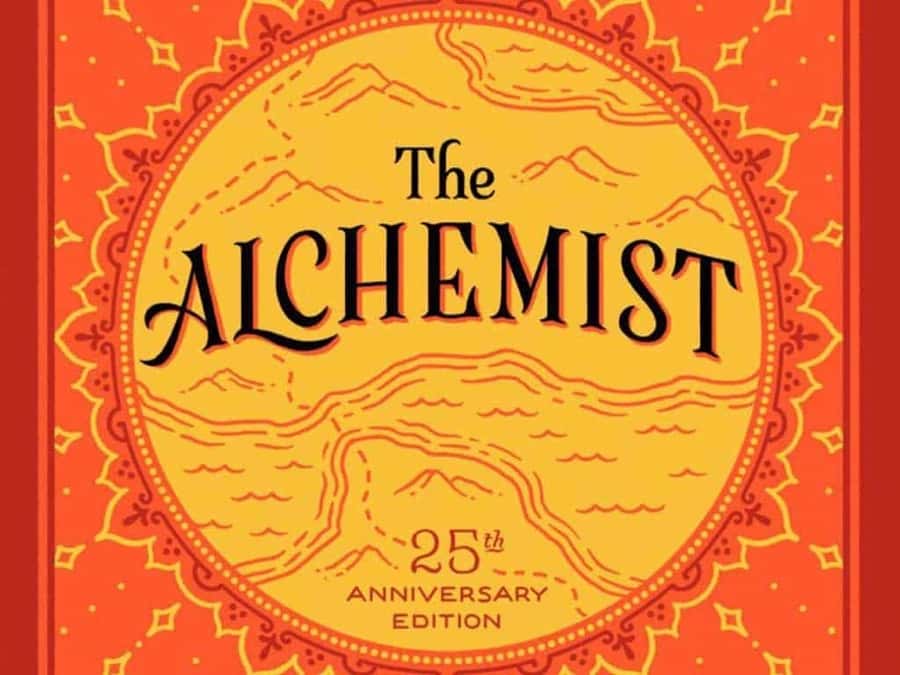
The Alchemist
A young shepherd follows a dream all the way to Egypt. Along the way he learns that the journey itself is the real treasure.
Read the review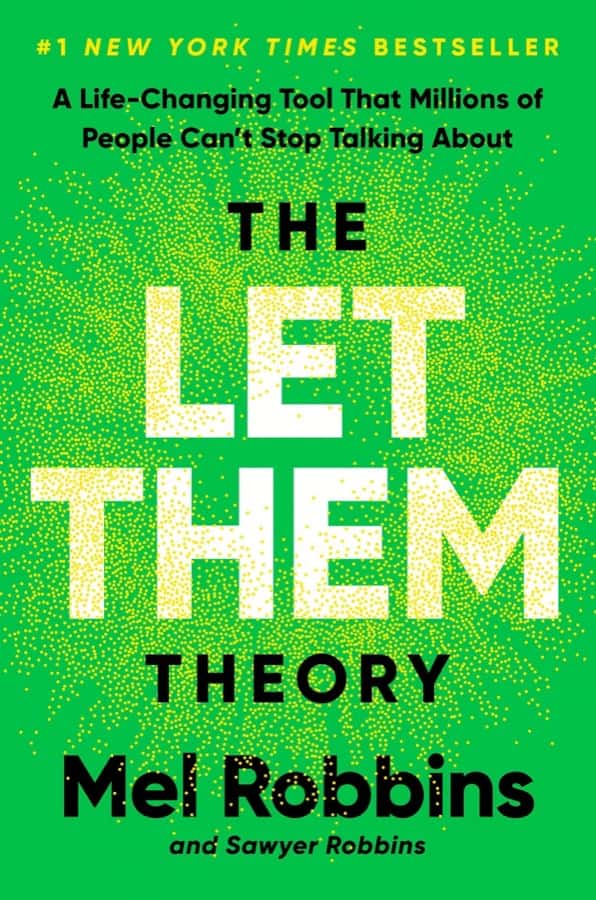
The Let Them Theory
Mel Robbins shows how to stop wasting energy on what other people do, and put it back into your own life with two simple words.
Read the review