
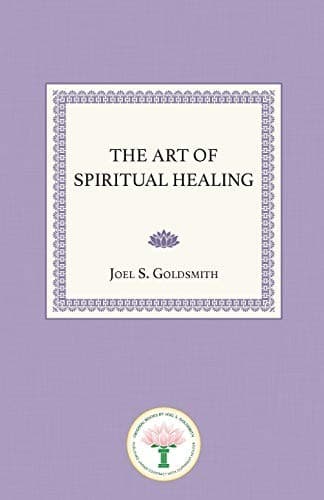
The Art of Spiritual Healing by Joel S. Goldsmith: Review
A 1959 classic that says healing comes from quiet, not from effort
Best for
- Readers who pray or meditate and want to go deeper
- Christians interested in mysticism
- Fans of Christian Science or New Thought ideas
- Patient readers who like to read slowly
The Art of Spiritual Healing is a 1959 book by the American mystic Joel S. Goldsmith. It teaches that healing comes through quietly realizing God's presence in meditation, not through mental power or trying hard to fix a problem. It is rich and calming, but the language is old and dense, and it should never replace medical care.
Key lessons
- 1
Healing starts in stillness
Goldsmith teaches that you do not force healing. You get quiet and let it come.
- 2
Do not use God as a tool
Prayer, in his view, is not asking God to fix things. It is turning toward God's presence.
- 3
Not mind over matter
He is clear that his way is not positive thinking or mental power.
- 4
Meditation is the practice
Regular quiet time with God is at the heart of the whole book.
What Is The Art of Spiritual Healing About?
The Art of Spiritual Healing was first published in 1959. It was written by Joel S. Goldsmith, an American spiritual teacher best known for a set of teachings he called The Infinite Way.
The book is about one big question: what does it really mean to heal through spirit? Goldsmith's answer is simple to say and hard to live. He believed healing happens when a person becomes aware of God's presence. It does not come from willpower, from repeating nice words, or from trying to push an illness away with your mind.
In his view, the healer does not do the healing. The healer gets still, turns to God in meditation and rests there. Goldsmith believed that out of that quiet, harmony shows up in the person who asked for help.
Much of the book reads like a teacher talking to students who want to heal others through prayer. It covers meditation, how to think about sickness and trouble, and the inner attitude of a spiritual healer.
The Main Ideas Explained Simply
Here are the core ideas in plain words:
- God is present already: You do not need to bring God into a hard situation. Goldsmith believed God is already there, and the work is to notice it.
- Prayer as listening: Real prayer, for him, is less about talking and more about being quiet and receptive.
- Trouble has no real power: Across his work, Goldsmith taught that sickness and evil have no true power in God's presence. This is a spiritual belief, not a medical claim.
- Stop trying so hard: Anxious effort gets in the way. Rest, trust and patience make room for healing.
If you are new to the subject, our guide to spiritual healing gives a simpler overview of prayer, meditation and other paths.
What We Liked and What Could Be Better
What we liked:
- Deeply calming: The book asks you to stop struggling and rest. For worried readers, that alone can be a relief.
- Serious about prayer: It treats meditation and prayer as a real daily practice, not a quick fix.
- Clear about mind power: Goldsmith separates his teaching from 'think it and it happens' ideas, which many readers find refreshing.
What could be better:
- Dense, older language: The writing is from the 1950s and can feel heavy and repetitive. You may need to read some pages twice.
- A very God-centred view: The whole book rests on one Christian mystical view of God. Readers from other faiths, or no faith, may find it hard to connect.
- Not a medical guide: The book should never be used in place of medical care. If you are sick, see a doctor, and use prayer alongside treatment.
How to Use This Book in Daily Life
You do not need to become a healer to get something from it. Try this:
- 1Read a littleRead a few pages at a time. This is not a book to rush.
- 2Sit in quietClose the book and sit still for five or ten minutes. Do not ask for anything. Just rest.
- 3Let go of effortWhen worry comes, notice it and come back to the quiet.
- 4Keep your doctorUse this practice for peace of mind, next to any care you already get.
If this book speaks to you, ask yourself
- Do I pray to ask for things, or to rest with God?
- Where am I trying too hard to force an answer?
- How could I make room for a few quiet minutes each day?
Questions people ask
What is The Art of Spiritual Healing about?
Who was Joel Goldsmith?
Is The Art of Spiritual Healing hard to read?
Can this book replace medical treatment?
Sources and further reading
- Joel S. Goldsmith, Wikipedia
Did this resonate with you?
Published September 29, 2026. Last updated September 29, 2026.
More books
Other calm reads for your path.
The Power of Now
Eckhart Tolle shows how much of our pain comes from living in our thoughts, and how to find peace by coming back to this moment.
Read the review
Be Here Now
A Harvard professor goes to India and comes back as Ram Dass. His book Be Here Now is a warm, playful guide to living in the present.
Read the review
The Book of Awakening
Mark Nepo wrote a short reading for each day of the year, each with a small practice. It is a calm, kind way to start or end your day.
Read the review